

GreenRoots Hub: A Place Where Local Initiatives Take Root
The German organisation Austausch e.V. has opened the GreenRoots Hub in Dnipro so that communities in frontline regions can restore their environment themselves. Here is how it works and what the first ten teams have already accomplished.
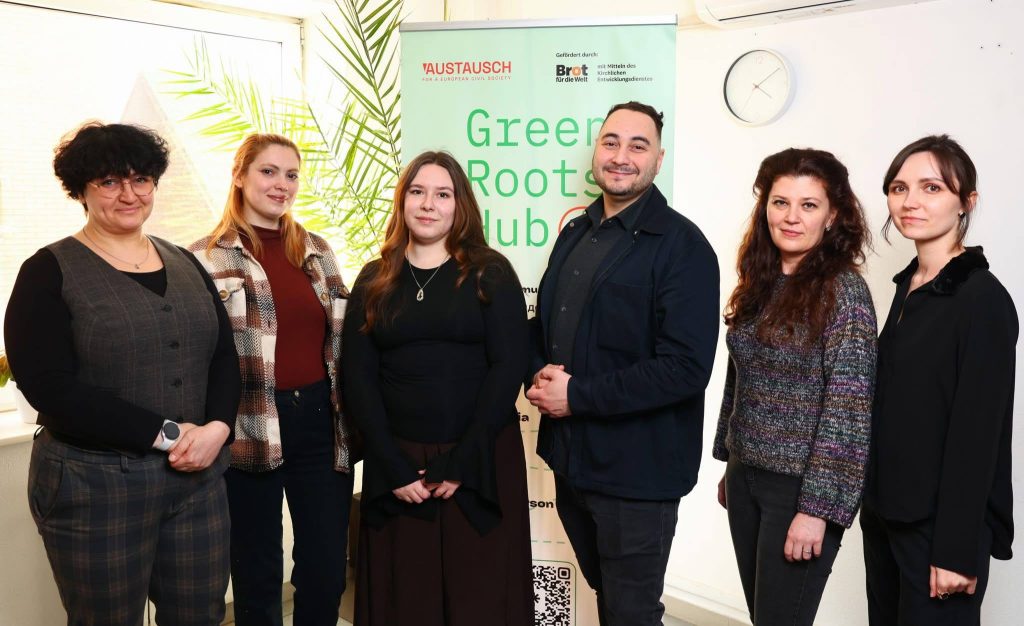
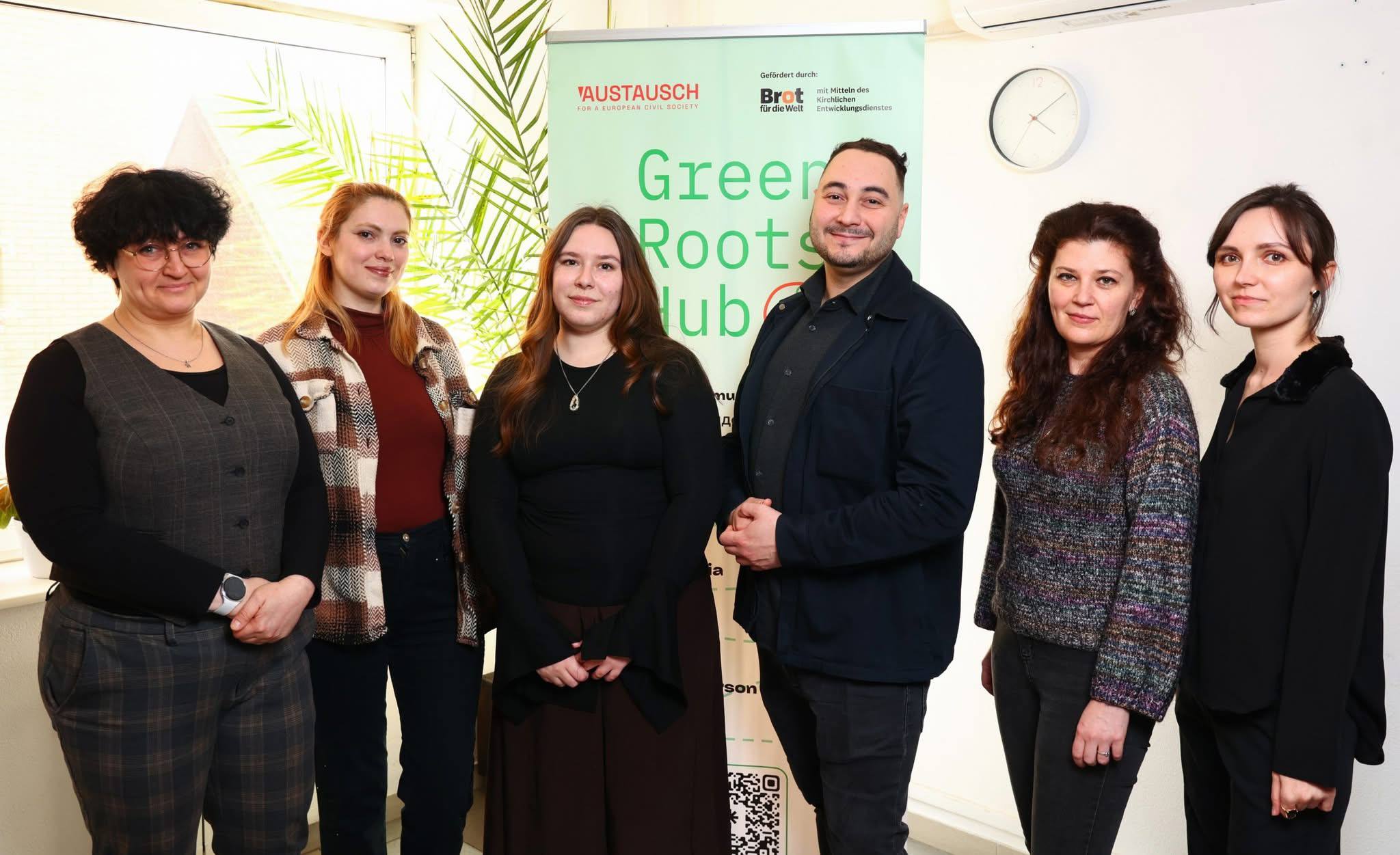
The charitable organisation “GREENROOTSHUB – LOCAL INITIATIVES DEVELOPMENT” was established by the German civil society organisation Austausch e.V. with the support of the German charitable organisation Brot für die Welt. Our physical space in Dnipro hosts partner meetings, lectures, and workshops. You can hold your own event here free of charge — and we will help with the organisation. The Hub is open for educational, cultural, environmental, and community events in any format: lectures, trainings, workshops, film screenings, book clubs, networking sessions, strategic sessions, presentations, and creative gatherings.
The Hub’s first major project is the Resilient Roots sub-grant competition:
- 91 applications from civil society organisations and initiatives
- 6 frontline oblasts: Dnipropetrovsk, Kharkiv, Zaporizhzhia, Kherson, Mykolaiv, and Odesa
- 10 winners selected by an independent commission involving Austausch e.V., NGO Ecodia, and NGO EcoClub Rivne
The projects operate across five areas: water resource restoration, access to clean water, green space restoration, soil remediation, and composting. Below are all ten, grouped by theme.
Land After Explosions and Oil
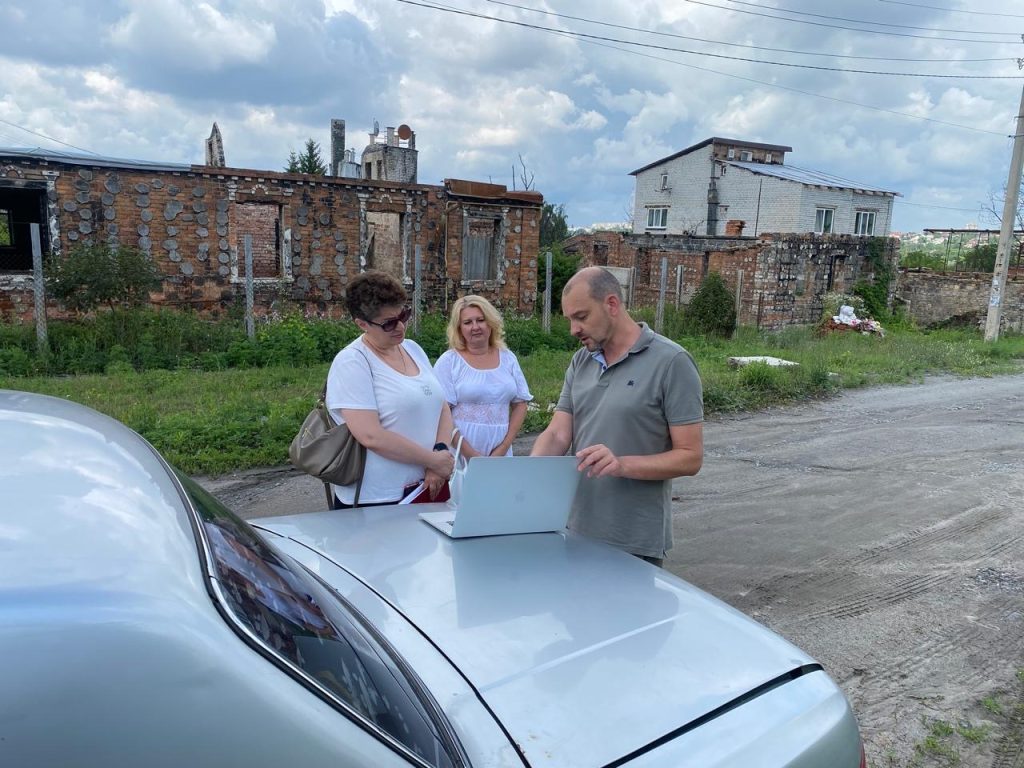
Restoring the Contaminated Ecosystem of Kharkiv’s Nemyshlianskyi District
Kharkiv, NGO “e-Dialogue”
Following an attack on an oil depot in 2024, approximately 800 tonnes of petroleum products entered the soils of a residential neighbourhood. The team is piloting an approach to soil remediation and ecosystem restoration in the district.
What has already been done: 10 households were surveyed to understand how residents use contaminated soils and water sources. Based on this data and existing environmental research, the team identified which threats pose a genuine risk to people and the environment.

Living Steppes — Resilient Communities: Post-War Restoration of Pastures and Meadows
Kherson and Odesa oblasts, NGO “Rewilding Ukraine”
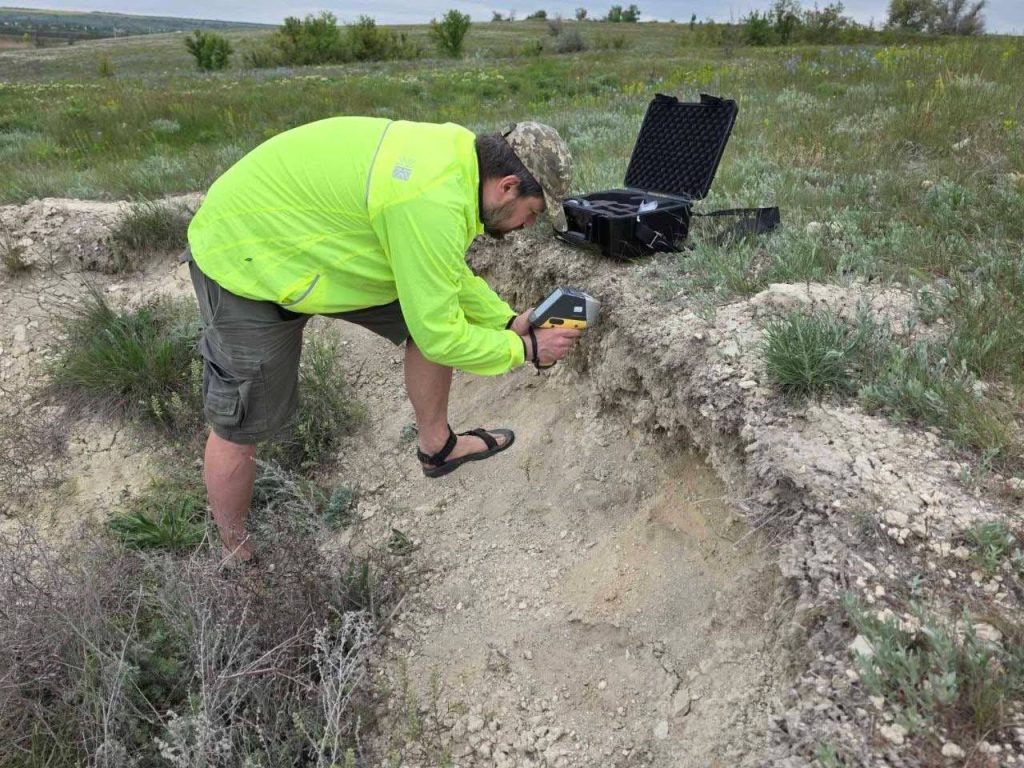
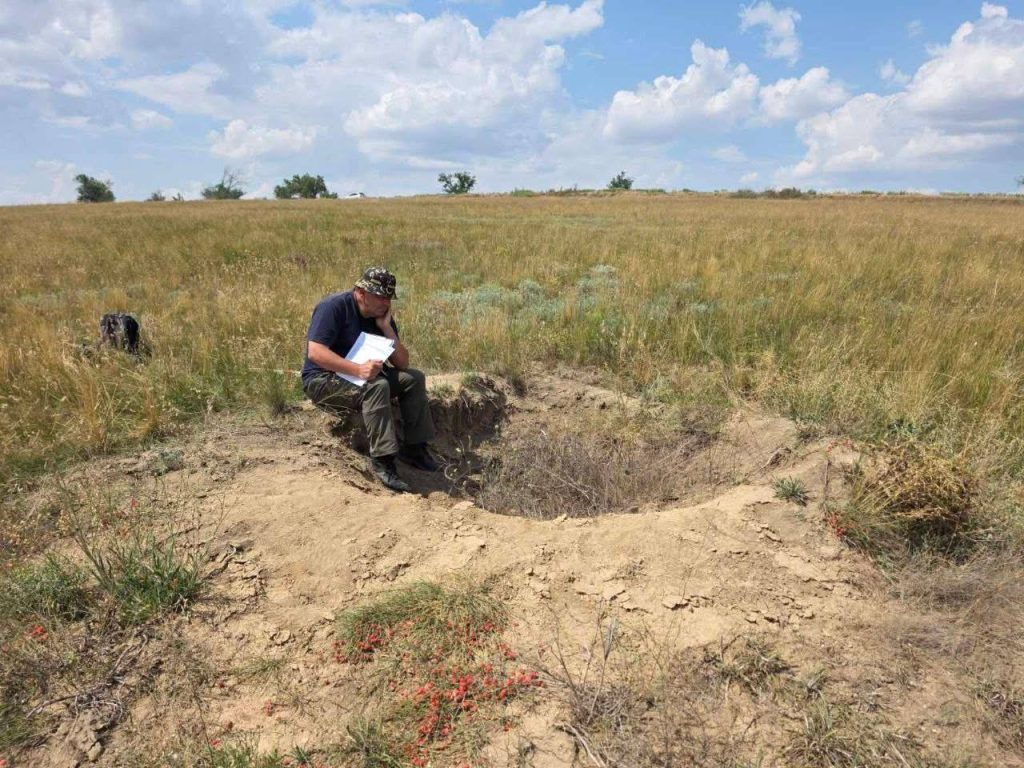
The team is developing a methodology for the accelerated restoration of war-damaged steppe: local hay with seeds, sod transplantation, and reseeding of steppe species. Results will be compared with naturally recovering plots to produce a simple model that can be replicated on other affected territories. Restored steppe on degraded arable land more quickly returns fertility, structure, and the capacity for self-regeneration to the soil.
What has already been done: four field expeditions to de-occupied territories of Kherson and Mykolaiv oblasts and to the former Tarutyne military training ground in Odesa oblast. Researchers examined 5 caponiers and 24 blast craters, produced 141 geobotanical descriptions, and tested soils with a portable X-ray fluorescence analyser for heavy metals and toxic elements. Based on this data, the sites from which restoration will begin have been identified.
Ecological Restoration of Vilniansk District: Regenerative Practices for Household and Women’s Resilience
Vilniansk community, Zaporizhzhia oblast, NGO “Gender Creative Space”
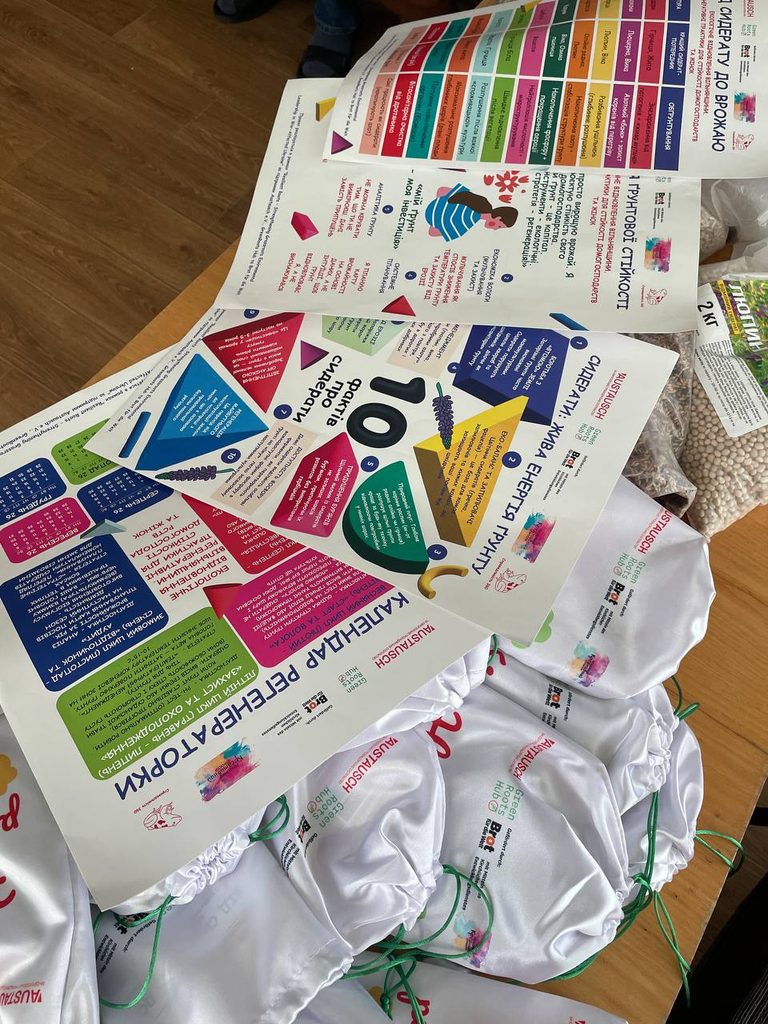
The project trains families in regenerative farming — vermicomposting, green manure crops, and phytoremediation. Special attention is paid to greenhouse farms and IDP families.
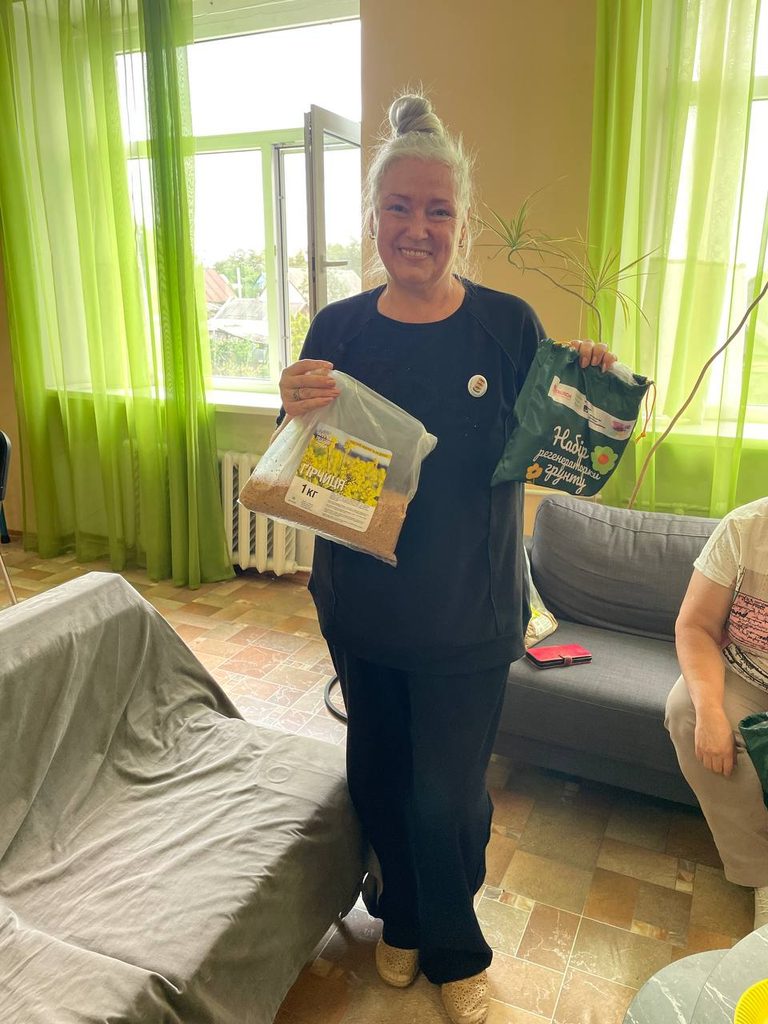
What has already been done: rapid soil diagnostics in over 200 women-led households, including IDP greenhouses. Over 150 families received individual consultations on how to maintain soil fertility. Over 200 kg of green manure seeds — plants that naturally purify and loosen soil — were transferred to the community, and more than 3 hectares have been sown. Over 100 households are growing hyperaccumulator plants that extract heavy metals from the topsoil. 25 families received Californian worms for biohumus production, and over 30 received Fokine flat-cutters for tillage without ploughing. A series of training sessions on vermicomposting and regenerative practices was held for local women.
Water: From Wells to Estuaries
Clean Water — A Healthy Future
Nova Odesa, Mykolaiv oblast, NGO “Chimeras of the Wild Steppe”
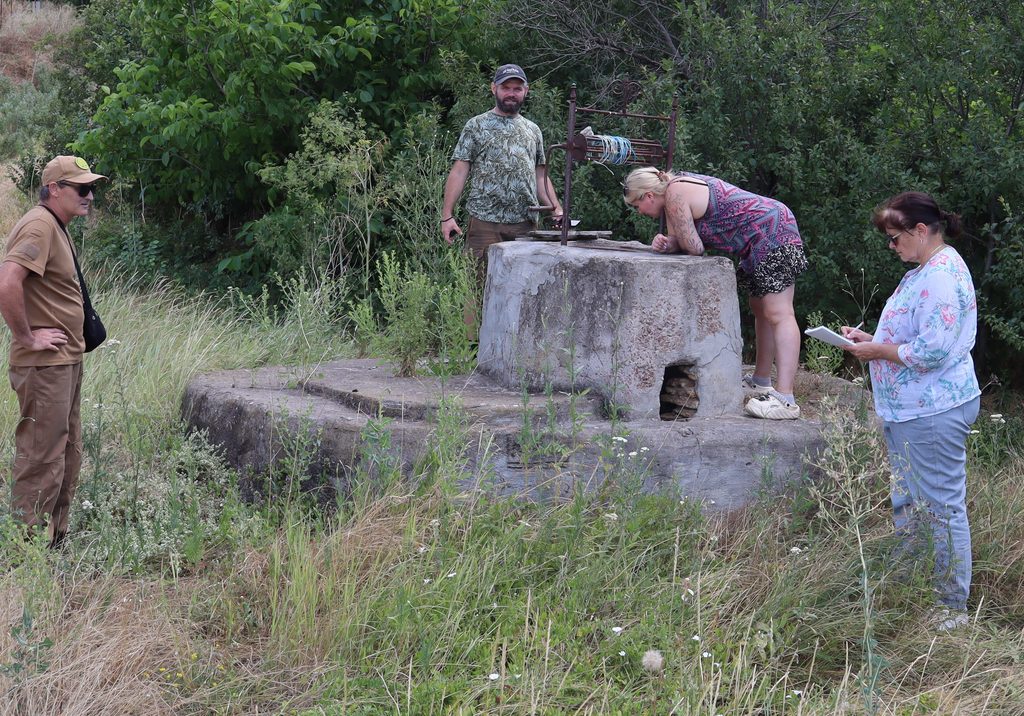
Inventory of local water sources, water quality monitoring, management of natural springs and wells, and education on safe water use.
What has already been done: together with local activists, the team examined over 50 springs, historic wells, and boreholes and collected 50 water samples for analysis. Thanks to the activists, more residents learned about the project, and more people now want to protect their water.
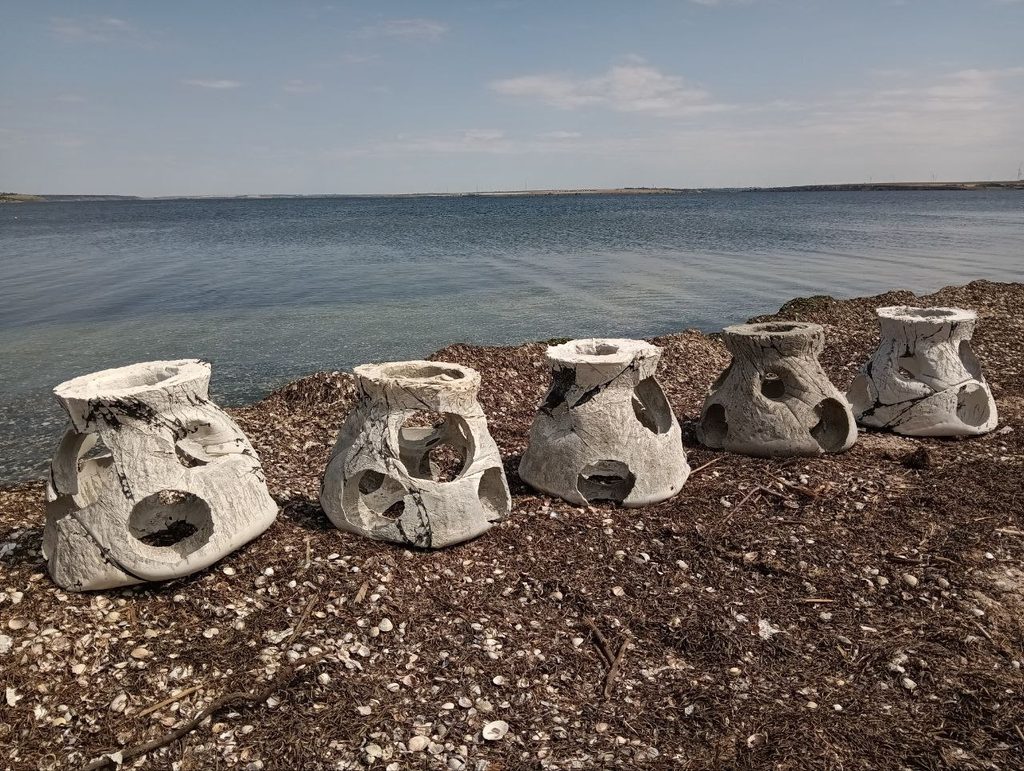
LIMAN REEF: Restoring Estuary Ecosystems Through Nature-Based Solutions
Koblivska, Berezanska, and Chornomorska communities, Mykolaiv oblast, NGO “Kinburn”
Artificial reefs are being installed in the estuaries. Biofiltration organisms will settle on them, purifying the water, restoring biodiversity, and launching the natural self-purification of the water bodies.
Green Protection and Spaces for Recovery
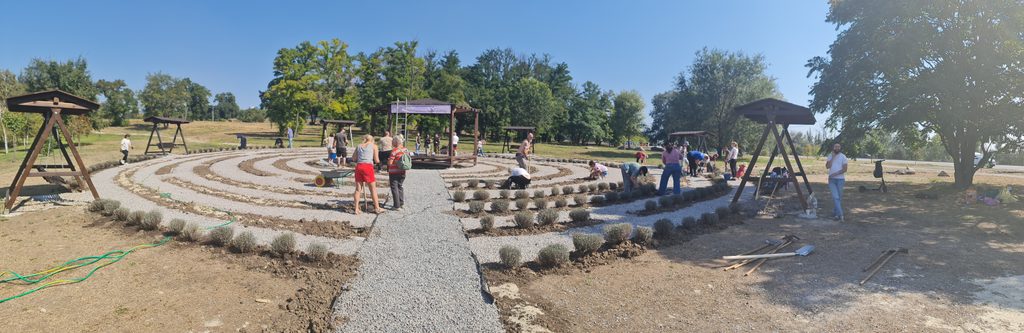
Recovery Space: Lavender Labyrinth
Zaporizhzhia, NGO “I Have the Right to Breathe”
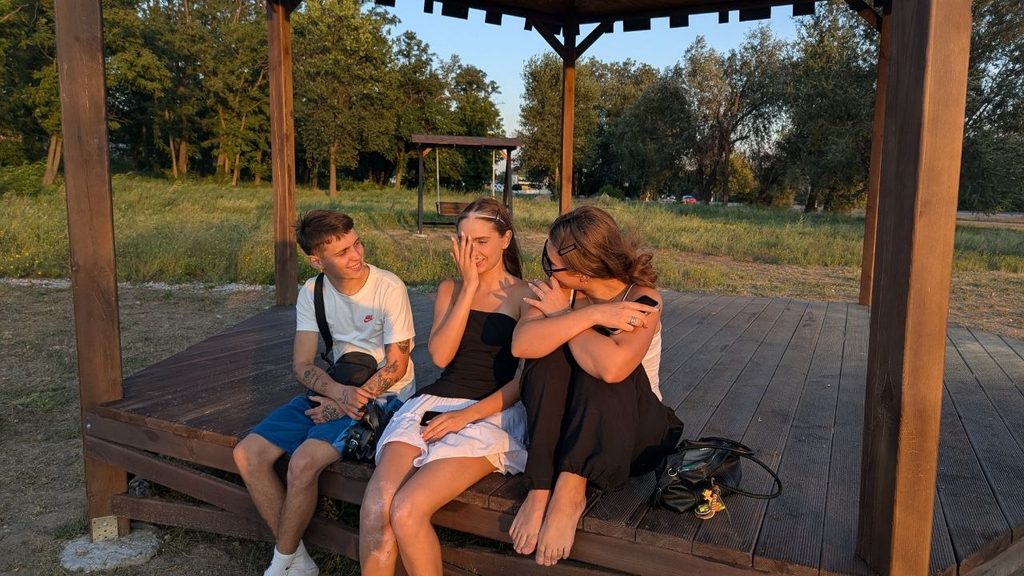
A lavender labyrinth has appeared in Veselka Park: 1,100 bushes across 800 m². About fifty city residents came to plant them. The labyrinth is at once an ecological solution for the city and a quiet place where residents, veterans, and displaced persons can restore their strength.
Emerald Barrier: Restoring the Shelterbelts of the Tuzlivski Estuaries
Lymanska community, Odesa oblast, NGO “Blue Wave”
1,500 trees and 2,000 shrubs planted along the boundaries of the Tuzlivski Estuaries National Nature Park will protect the fields from erosion, preserve soil fertility, and prevent the illegal ploughing of the protected steppe.
Waste as a Resource
Kherson’s Eco-Resilience: Decentralised Bio-Waste Management
Kherson, NGO “Ecological News”
250 households will compost organic waste at home, and a shared composter will be set up for the community. This means less waste at the landfill, lower methane emissions, and reduced risks for municipal workers operating under shelling. The project is a pilot test of the Local Waste Management Plan’s solutions. Partners: Kherson City Territorial Community, Municipal Enterprise “Parky Khersona”, Municipal Enterprise “Ecopoliс”, district committees, HOAs, suppliers, and logistics providers.
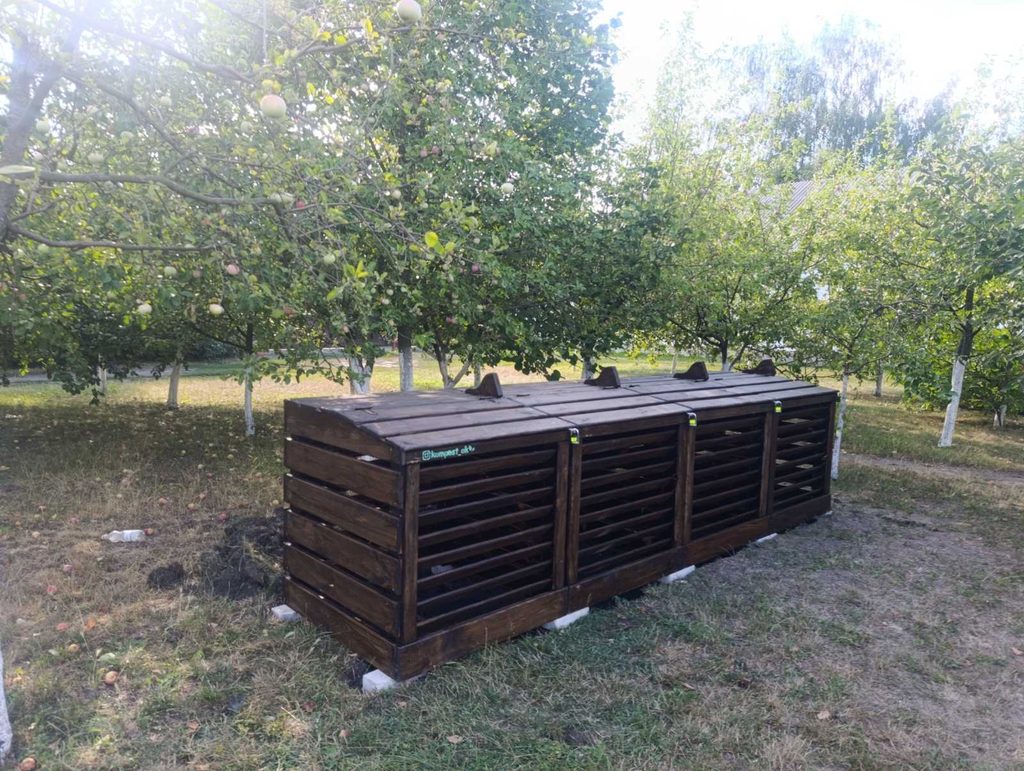
Living Soil: Composting Instead of Burning
Kryve Ozero, Mykolaiv oblast, NGO “Kryvozerska Development Platform”
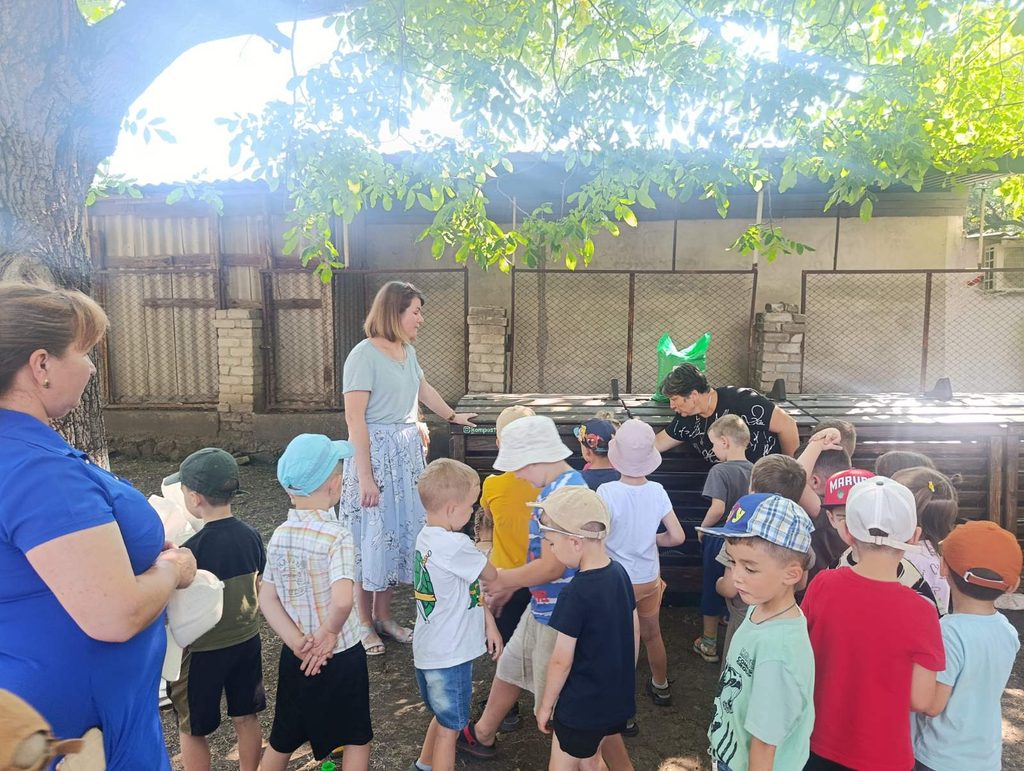
Municipal and educational institutions in the community are stopping the burning of leaves and plant residues — and composting instead. The compost is returned to the soil, reduces methane emissions, and helps the land retain moisture during increasingly dry years.
What has already been done: staff at educational institutions learned how to use a composter, sort organic waste, manage compost, and integrate composting into environmental education. Children learned in a playful way what can be composted, why burning leaves is harmful, and how organic waste becomes useful compost — and tried working with the composter themselves.
ADAPTERRA POWER: Autonomy That Gives Communities Resilience
Zelenyi Hai village, Dnipropetrovsk oblast, NGO RC “Zelenyi Hai”
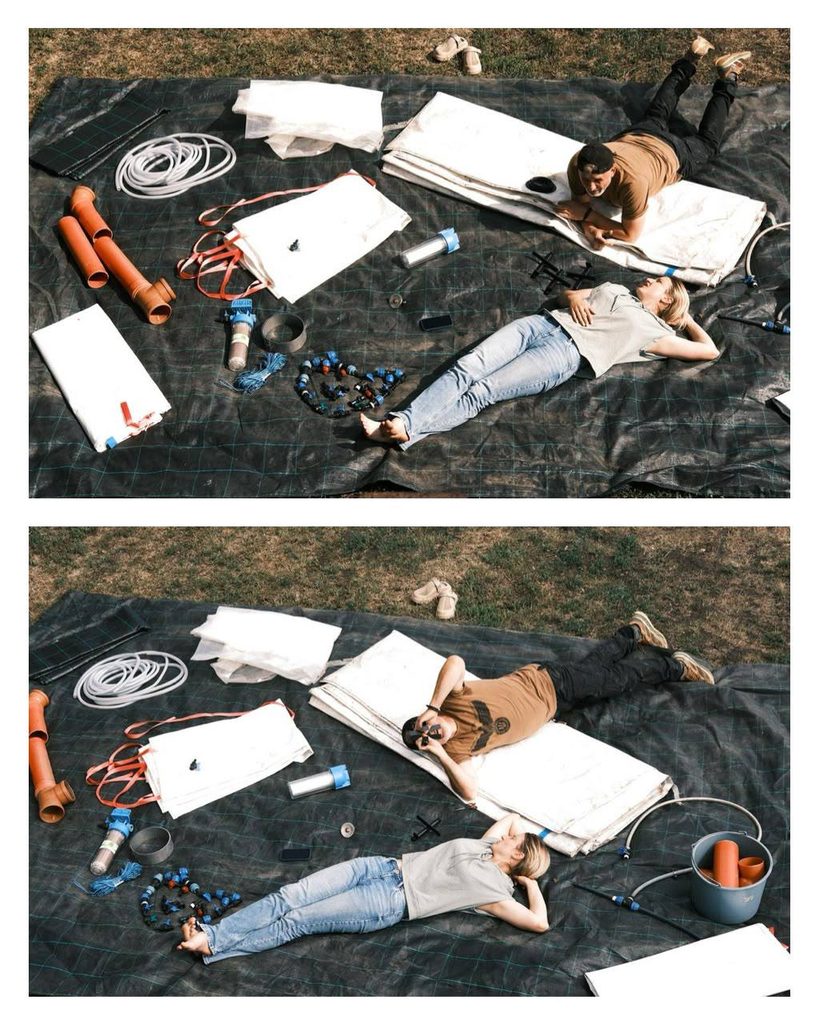
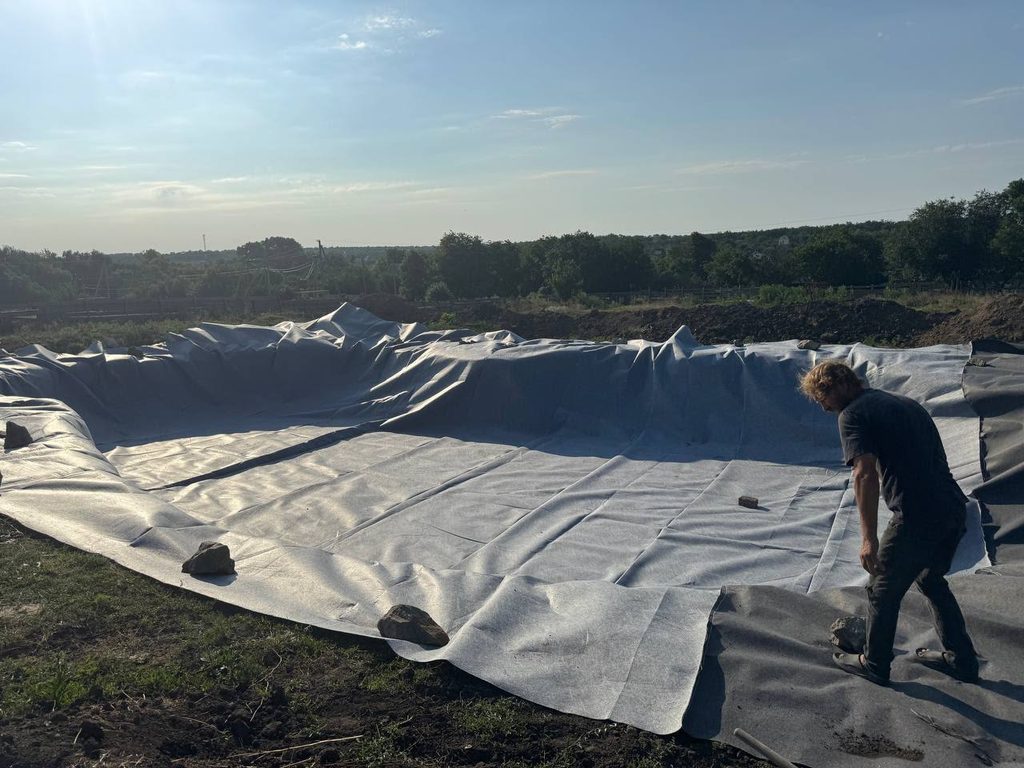
At the rehabilitation centre, the team is building a closed loop: organic waste goes into a biogas installation, water is purified by a bioplateau system, and new trees protect the territory from dry winds. The model is designed to be adopted by other frontline communities.
Moving Forward Together
All ten teams are now actively implementing their projects. We track their progress and work together to find solutions to current challenges, while mentors support the teams and share practical experience. We hold online events together with the teams. At the end of August, a lecture on “How Abnormal Heat Affects the Environment” took place, and a meeting on composting is planned as part of Ukrainian Climate Week.
The recovery of Ukraine is not only about rebuilding bridges and buildings. It is also about living soils, clean water, steppe and forest — and strong local communities that care for them. That is why we will continue to create opportunities for eco-activists and civil society organisations in frontline regions, so that their projects improve people’s lives right now.
Follow GreenRoots Hub and our projects:
LinkedIn: www.linkedin.com/company/greenrootshub/
Instagram: www.instagram.com/greenrootshub
Facebook: www.facebook.com/greenrootshub