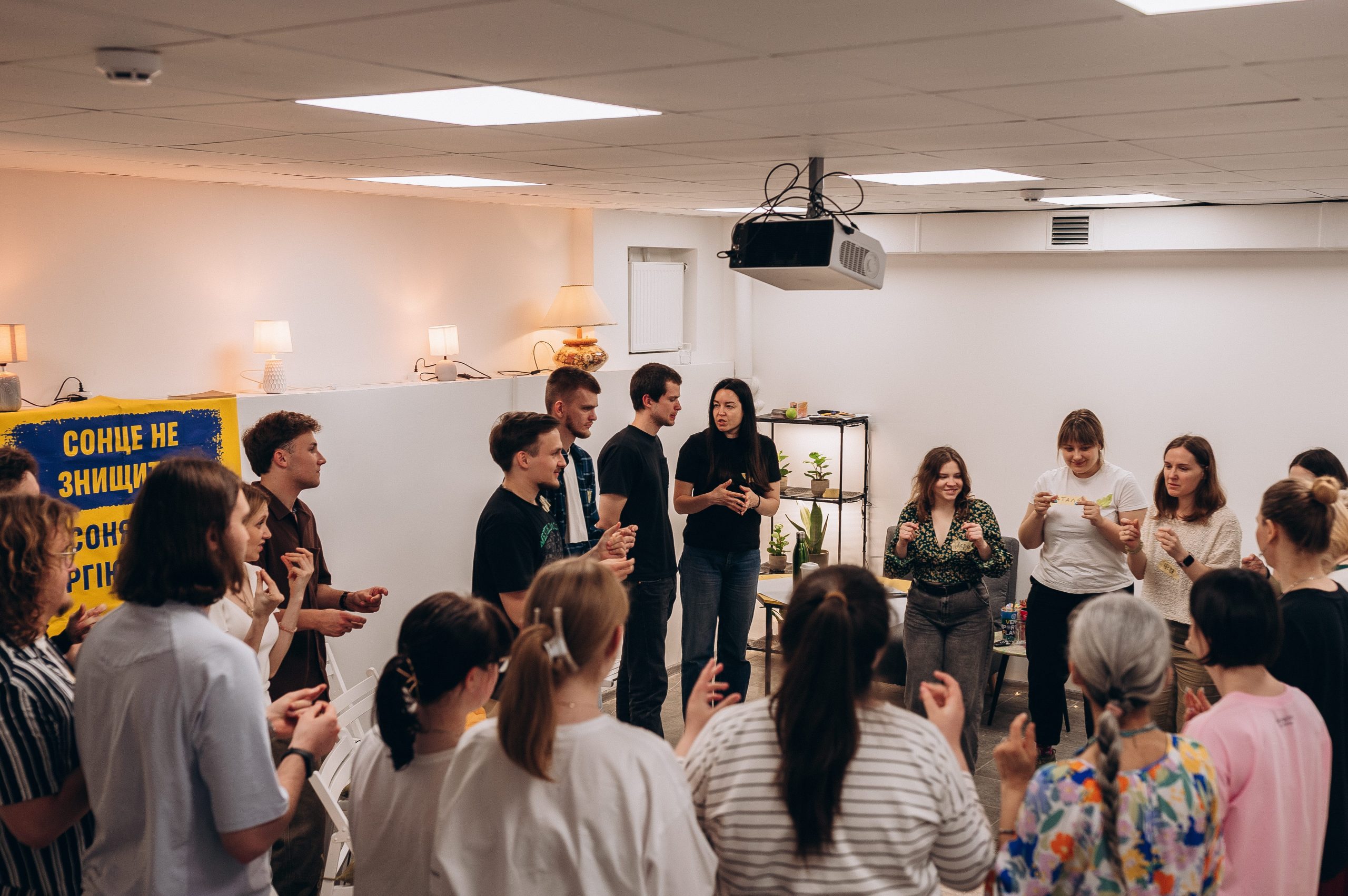

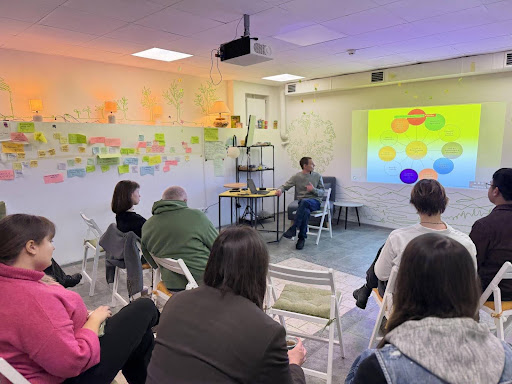
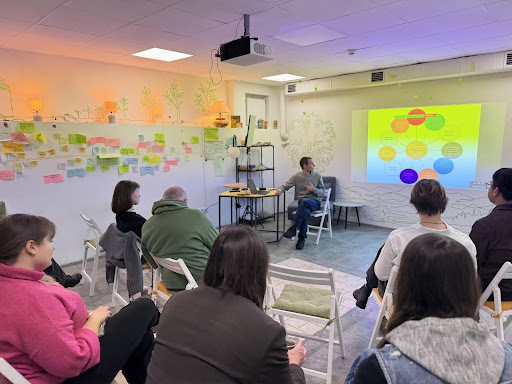
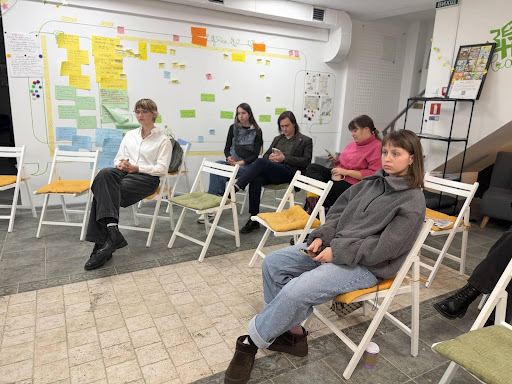
On November 17, 2026, Green Val eco-space in the very center of Kyiv hosted an event aimed at promoting a scientific approach to sustainable development. The topic was microalgae and cyanobacteria, the “green factories” that once created the conditions for life to appear on our planet and may now hold the key to solving many environmental problems.
The open lecture by Mykola Mylenko (PhD), a research fellow at the Institute of Hydrobiology of the National Academy of Sciences of Ukraine, explored how “simple” organisms keep helping us tackle complex global challenges. Its goal was to draw public attention to the role of modern technologies in meeting today’s needs.
Microalgae and cyanobacteria
There are organisms that can absorb carbon dioxide much faster than land plants, produce the lion’s share of the planet’s oxygen, form eco-friendly fuel, purify water and even serve as a superfood. This is not science fiction. It is already the reality of one of the most promising fields of modern science: microalgae biotechnology.
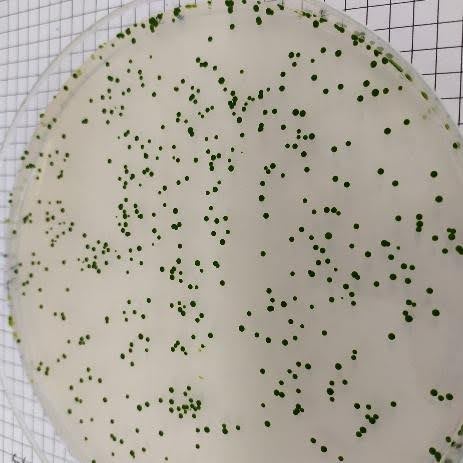
Microalgae and cyanobacteria are microscopic single-celled or colonial living organisms that traditionally inhabit aquatic environments. According to leading scientific views on evolution, they were among the first living organisms on Earth, the first producers. They prepared the planet for other forms of life by providing oxygen and a primary food base.
These organisms stand out for their rapid growth and highly efficient photosynthesis: in most cases they turn solar energy, carbon dioxide and water into biomass more productively than traditional crops. On top of that, growing them requires neither fertile black soil nor vast areas of arable land.
Interestingly, during cultivation these microorganisms can be “tuned” to synthesize the substances we need. Depending on the task, they can meet the needs of the food, pharmaceutical, construction, light and other industries. Microalgae and cyanobacteria have huge potential in energy, fighting environmental pollution, building a circular economy, creating comfortable living spaces and sustainable development in general.
Microalgae: our main partners in space exploration
Today humanity is taking its first steps toward the economic development of space, at least near space, which implies its gradual colonization. Microalgae are very likely to become the main partners of the pioneers exploring space objects, starting with spacecraft and orbital stations.
In an enclosed environment, they will help build closed-loop life support systems: producing food and restoring oxygen from the crew’s metabolic products. In the long run, microalgae could also speed up the terraforming of Earth-like planets, since nature has already done it once.
Written by Mykola Mylenko, research fellow at the Institute of Hydrobiology of the National Academy of Sciences of Ukraine.
Author’s social media: Facebook